Juan Carlos Guerri

Juan Carlos Guerri

Full Professor · Head of the group
Juan Carlos Guerri Cebollada was born in Valencia, Spain in 1969. He received his M.S. and Ph.D. degrees in Telecommunication Engineering from the Universitat Politècnica de València (UPV) in 1993 and 1997, respectively. He is a Full Professor in the Department of Communications Engineering at UPV, where he teaches at the ETSI Telecomunicación. He leads the Multimedia Communications research group (COMM) of the iTEAM (Institute of Telecommunications and Multimedia Applications). His research spans multimedia communications, adaptive video streaming (DASH), quality of experience, wireless and ad hoc networks, and the application of multimedia technologies to industry, medicine, education and communications.
Performance evaluation of peer-assisted MPEG-DASH streaming in multi-user mobile scenarios featured image

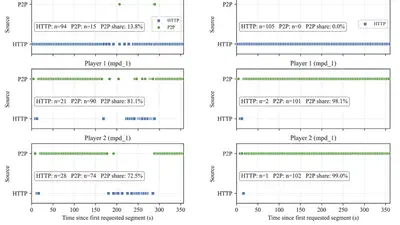
Performance evaluation of peer-assisted MPEG-DASH streaming in multi-user mobile scenarios

Performance evaluation of peer-assisted MPEG-DASH streaming with multiple concurrent users in mobile scenarios.


avatar
Román Belda
•
From Radio Telemetry to Perceptual Quality: A QoE-as-a-Service Framework for Multi-User OTT Streaming in 5G Vehicular Environments featured image

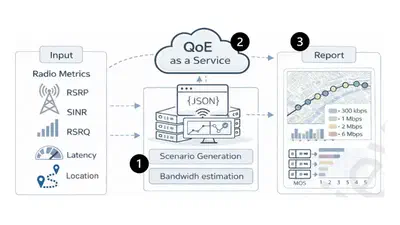
From Radio Telemetry to Perceptual Quality: A QoE-as-a-Service Framework for Multi-User OTT Streaming in 5G Vehicular Environments

A QoE-as-a-Service framework for 5G vehicular environments that maps radio telemetry to perceptual video quality metrics, enabling network-side QoE monitoring for OTT streaming …

avatar
Juan Carlos Guerri
•
SwarmLayer: A Hybrid P2P Assisted Solution for MPEG-DASH Streaming featured image

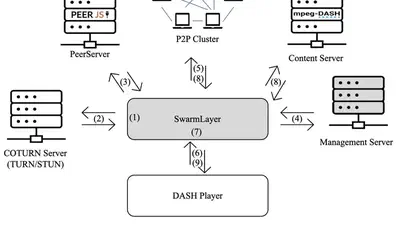
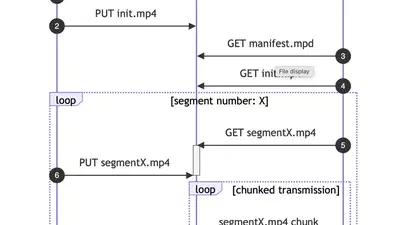
SwarmLayer: A Hybrid P2P Assisted Solution for MPEG-DASH Streaming

SwarmLayer is a hybrid P2P layer for MPEG-DASH that uses WebRTC and Service Workers to offload up to 96% of server traffic with no changes to existing players.
avatar
Román Belda
•
A DASH server-side delay-based representation switching solution to improve the quality of experience for low-latency live video streaming featured image

A DASH server-side delay-based representation switching solution to improve the quality of experience for low-latency live video streaming

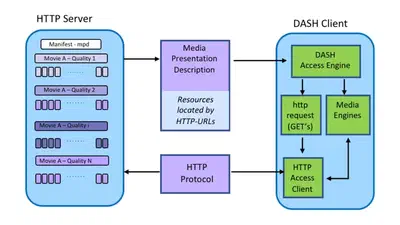
SSRS for LL-DASH live streaming uses server-measured client request delays to adapt video quality, achieving good quality-latency trade-offs without player modifications.
avatar
Román Belda
•
DASH Streaming traffic influence over energy efficient ethernet to improve energy savings featured image

DASH Streaming traffic influence over energy efficient ethernet to improve energy savings

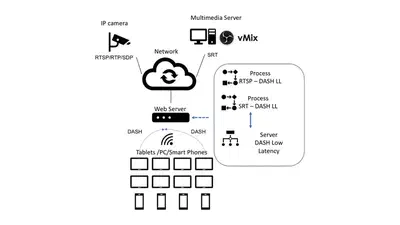
Dynamic Streaming over HTTP (DASH) is the main standard used in online video streaming services, given that more than 1.2 billion pay subscribers around the world use this …

avatar
Tito R. Vargas
•
Performance Evaluation and Testbed for Delivering SRT Live Content using DASH Low Latency Streaming Systems featured image

Performance Evaluation and Testbed for Delivering SRT Live Content using DASH Low Latency Streaming Systems

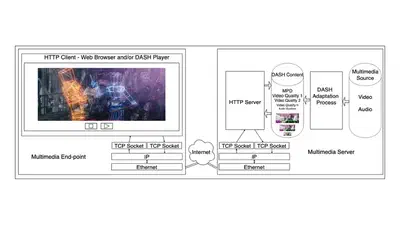
A testbed for evaluating LL-DASH live streaming from SRT/RTSP sources, achieving end-to-end delays under 2 seconds using FFmpeg and open-source players.
avatar
Román Belda
•
Study on the Impact of DASH Streaming Services using Energy Efficient Ethernet featured image

Study on the Impact of DASH Streaming Services using Energy Efficient Ethernet

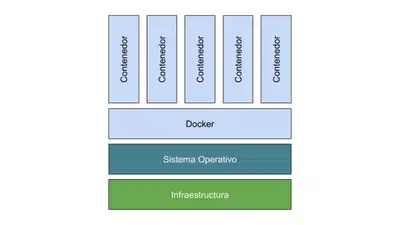
Dynamic Streaming over HTTP is the main standard used for online video streaming, service that has about 1.1 billion subscribers around the world. That implies billions of …
avatar
Tito R. Vargas
•
Uso de contenedores Docker en el entorno educativo featured image

Uso de contenedores Docker en el entorno educativo

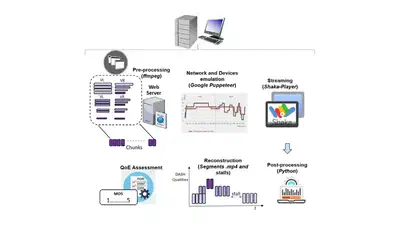
Using Docker containers in university lab courses to provide reproducible, cross-platform environments that simplify deployment of complex networking scenarios for students.

avatar
Ismael de Fez
•
Automatic QoE evaluation for asymmetric encoding of 3D videos for DASH streaming service featured image

Automatic QoE evaluation for asymmetric encoding of 3D videos for DASH streaming service

The paper is based on the study of the performance of a Dynamic Adaptive Streaming over HTTP (DASH) system in the context of 3D video streaming, using different scenarios and …

avatar
Paola Guzmán
•
New objective QoE models for evaluating ABR algorithms in DASH featured image

New objective QoE models for evaluating ABR algorithms in DASH

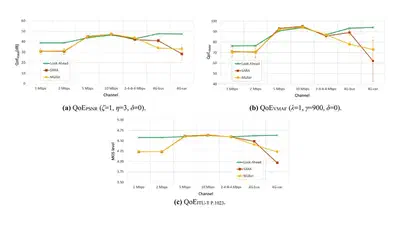
Three new objective QoE models for DASH based on PSNR and VMAF, validated subjectively and via the Look Ahead ABR algorithm, outperforming existing models.

avatar
Ismael de Fez
•