Interoperability network model for traffic forecast and full electric vehicles power supply management within the smart city
October 1, 2019·
 ,·
0 min read
Víctor Fernández
Juan Carlos Guerri
Alicia Roca
Abstract
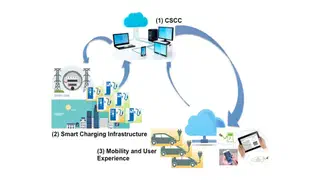
Information technologies and applied mathematics provide us with a comprehensive framework to search for solutions to problems derived from traffic management. It is relevant for the mobility in our future cities to integrate the Full Electric Vehicle (FEV) in an interoperability network which allows us to track the FEV autonomy and to forecast the traffic and the power supply demand in the city. The target is to optimize the energy consumption and to improve the mobility in the city. To achieve these goals we propose an infrastructure to efficiently manage the power supply availability in the network of charge stations in the city and an adaptive model to predict the traffic based on historic data and on time series obtained mathematically.
Type
Publication
Ad Hoc Networks, 93, 101929. Elsevier BV

Authors
Researcher
Víctor Fernández worked in COMM on smart-city interoperability, including traffic forecasting and power supply management for electric vehicles.

Authors
Full Professor · Head of the group
Juan Carlos Guerri Cebollada was born in Valencia, Spain in 1969. He received his M.S. and Ph.D. degrees in Telecommunication Engineering from the Universitat Politècnica de València (UPV) in 1993 and 1997, respectively. He is a Full Professor in the Department of Communications Engineering at UPV, where he teaches at the ETSI Telecomunicación. He leads the Multimedia Communications research group (COMM) of the iTEAM (Institute of Telecommunications and Multimedia Applications). His research spans multimedia communications, adaptive video streaming (DASH), quality of experience, wireless and ad hoc networks, and the application of multimedia technologies to industry, medicine, education and communications.